The distance between a Wacky Cake mixed right in its baking pan and a checkerboard coconut layer cake is roughly four hours of cooling time.
What settles which one belongs on your counter is whether you need the cake to do the talking, or you need to be done before the guests arrive.
The 40-minute cookie cake pressed into a pizza pan proves the shortcut end of that range is real, and feeds twelve without a single layer to stack.
1. Classic Confetti Birthday Cake

A 15.25 oz box of yellow cake mix baked at 350° F for 30 minutes, with 1 tablespoon of rainbow sprinkles folded in, reads as birthday before anyone tastes it.
Total time is 4 hours including cooling and frosting, which sounds long until you remember that three of those hours are hands-off.
The cake itself takes 15 minutes to mix and another 30 in the oven; the rest is waiting for the layers to cool enough that your chocolate frosting won’t slide right off.
One egg added to the box instructions tightens the crumb and gives it that from-scratch flavor without the from-scratch effort.
Skip the nonpareils, the tiny colored balls, since they bleed streaks of dye through the batter. Stick with flat confetti quins or standard rainbow sprinkles, the kind every grocery store stocks in the baking aisle.
Two 8-inch layers look festive, but a sheet cake works just as well if you are feeding a crowd and do not want to slice and stack.
Either way, the sprinkles melt into soft color against the yellow crumb, and the result is what people picture when they hear "birthday cake." It is the safest choice in this whole list, which is exactly why it belongs here.

Rainbow Pastel Sprinkles: Elevate your baking and cake decorating with a bulk container of rainbow pastel confetti sprinkles. These delightful candy quins add a burst of color, featuring a stunning array of pastel shades perfect for creating a whimsical and enchanting touch to your treats.

Rainbow Sprinkles for Cake Decorating: The confetti sprinkles include red, orange, yellow, green, and blue. Whether it's cakes, cupcakes, cookies, ice cream, cake pops, brownies, or any dessert you can dream of, our confetti sprinkles are your go-to for that extra dash of cheer

Elegant Candy Quins - Top off sweet birthday treats with these quins. Add drama and flair to your celebration cakes and desserts with these fancy sprinkles.
2. Three Layer Strawberry Cake
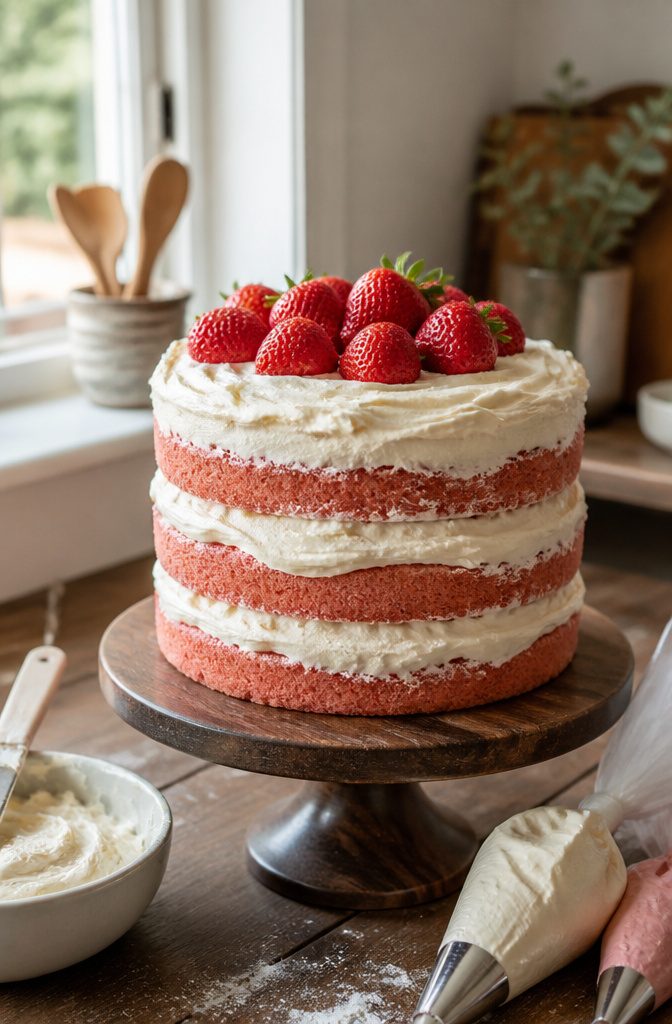
A three-layer strawberry cake reads as advanced bakery, but the layers come from one batch of batter split three ways, not three separate mixing sessions.
That single decision drops the active work to something reasonable for a weeknight evening, with the full clock landing near 2 hours 50 minutes including cooling.
Fresh or frozen strawberries both work in the layers. Frozen berries release more juice during baking, so the batter may need a slightly longer set in the oven to avoid a damp crumb.
Either way, the fruit keeps the interior moist without the oily heaviness that oil-based cakes pick up by day three.
The cream cheese frosting is the practical choice here, and for a reason beyond taste. It crusts firm enough after thirty minutes in the refrigerator that you can slice clean wedges for a crowd.
Buttercream stays too soft for that, especially in a warm kitchen with candles lit. The slight tang against sweet berries is a bonus; the reliable slice is the point.
One 9-inch round holds roughly a third of a standard layer-cake batter.
Weigh the total if you own a scale, or pour by eye to the same line on each greased pan. Uneven layers telegraph shortcut, and this cake already asks the reader to trust that simplicity can look deliberate.

Riccle Piping Bags and Tips Set, 11.8 Inch 100 Anti Burst Piping Bags, 124 Pcs Cake Decorating Kit with 16 Piping Tips, 1 Reusable Pastry Bags, 3 Cake Scrapers

1. Eco-Friendly & Extremely Durable Silicone Say goodbye to single-use plastics. Crafted from premium, food-grade silicone, these reusable piping bags are engineered to withstand over 500 heavy-duty squeezes without stretching, tearing, or blowing out. It is a sustainable choice that significantly reduces kitchen waste while providing professional-grade reliability for your thickest doughs and buttercreams.

PROFESSIONAL SILICONE PASTRY BAGS: Compared with others,ELK's piping bags uses the 60HA elastic silicone, which is the perfect material for the piping tips set. The slight elasticity ensures its reusability, allowing the viscous liquids to flow smoothly inside. It won’t blow out even if you knead the thick batter with it. Its high stretchiness means that all of the squeezing efforts you make gets transferred to bulging sides as it stretches out, instead of forcing the frosting out the bottom.
3. Coconut Cream Gingham Cake

A checkerboard cake sounds fussy until you see how the rings work. You pour alternating circles of vanilla and coconut batter into the same pan, and the heat does the marbling for you.
Sweetened coconut milk stands in for regular milk in the batter, so the pale half actually tastes like something when you slice in.
The gingham name only makes sense once the knife goes through. Those concentric rings crosshatch into a fabric-like grid on every face, which beats the usual sprinkle-and-frosting routine for anyone who wants the cake itself to do the talking.
Coconut milk in the batter is what separates a pretty slice from a memorable one; without it you are left with plain vanilla rings and a visual trick that fizzles on the tongue.
Cleanup is one bowl plus the usual round pans. The ring method takes a steady hand the first time, but no specialty tools, and the pattern is forgiving if your circles wobble a little.
I would plan the full four hours that a real coconut cake demands, most of it cooling time. The result reads special-occasion without the bakery price or the fondant learning curve.

Natural aluminum’s superior heat conductivity ensures consistent, evenly browned results every time you bake

Healthy Stainless Steel Material: Fcgbdbz round cake pans are made of pure stainless steel without toxic material, shiny and of decent weight, not worry about harmful chemicals leaching into food. Unlike aluminum pans and carbon steel baking pans with Teflon coating which are thin and lightweight, these stainless steel pans are healthy for your daily baking use. Oven safe up to 500°F for versatile baking needs.

Commercial-Grade Aluminum — Durable construction stands up to frequent use in bakeries, restaurants and home kitchens
4. Carrot Sheet Cake

Carrot sheet cake belongs in the rotation for anyone who needs to feed a crowd without the architecture project. One layer in a 9×13 pan means no splitting, no stacking, no praying the center doesn’t slide.
The cream cheese frosting goes on while the cake is barely warm, which skips the usual cooling step and lets the slight heat soften the sugar and butter into something that spreads like a dream.
The yield beats a standard layer cake by a wide margin, and the work is roughly half.
Grating carrots is the only real prep; everything else mixes in one bowl, bakes in about forty minutes, and comes out moist enough from the vegetable oil and shredded carrot that you don’t need to fuss with simple syrup or soaking layers.
I like this for a birthday because it looks rustic on purpose. A few swirls of frosting, some chopped pecans scattered on top if you have them, and it reads as intentional rather than unfinished.
The spice reads warm rather than loud, which means adults reach for seconds and most kids don’t pick around it.


5. Chocolate Red Wine Cake

Dry red wine deepens chocolate flavor without adding the fruitiness that coffee or orange zest would bring.
Any dry red works here; the alcohol bakes off completely, so the cake stays weeknight-friendly even for kids. The method is one bowl, no creaming butter and sugar separately.
You melt the fat, stir in the wine and cocoa, then add the rest. The crumb comes out dense and moist, closer to a brownie than a layer cake.
I find that texture holds up better to a simple dusting of powdered sugar or a thin glaze than to thick buttercream, which can feel like overkill against something this rich.
A cabernet or merlot from the $8–$12 shelf gives you all the depth you need; save the nice bottle for the table.

CREATE BEAUTIFUL CAKE: This rectangular cake pan features a straight-sided design that effortlessly creates symmetrical, smooth, and crisp edges for a visually appealing cake. Baking made easy!

Bake with confidence with Wilton Aluminum Pans. Designed in the USA and made from natural anodized aluminum, this 9x13 Inch rectangular sheet cake pan delivers durability and rust-resistance, ensuring a consistent result every time.
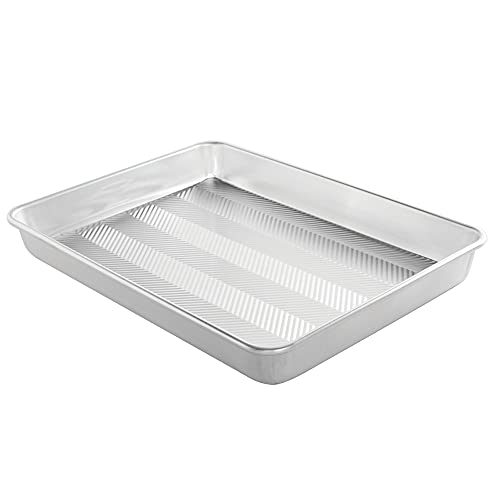
Better Airflow for Crisping
6. Gluten-Free Cake with Vanilla Buttercream

A one-to-one gluten-free flour blend from any grocery store is the only swap this cake needs.
Bob’s Red Mill, King Arthur, and store brands all work interchangeably here, because the recipe was built around that standard ratio rather than around wheat flour itself.
The result tastes like a regular yellow cake, not a compromise, and the texture stays tender rather than gritty.
The vanilla buttercream comes together while the layers cool. Standard confectioners’ sugar and butter, a little milk to thin, and a full tablespoon of vanilla extract for flavor that reads as real rather than merely sweet.
Total time runs 1 hour 35 minutes, and that includes the cooling window you spend on the frosting anyway.
No specialty equipment, no custom flour mix to hunt down. The kind of simple cakes birthday searches actually deliver on.

Sprinkles for Cupcake Candy And Cake Decoration - Elevate your cupcakes, candies, and cakes with the colorful and delightful addition of Quins ABC Sprinkles, the perfect decoration to make your treats stand out.

Food-grade Sprinkles: The edible round sprinkles are made with international food-grade ingredients and a pure, vegan-friendly formula Preservative Free,Crafted from natural cane sugar crystals and manufactured,Nut Free, Dairy Free, Chemical Free, Soy Free, Non-GMO. Produced using food-safe standards, the process does not come into contact with allergenic substances and uses Tamper-proof food label
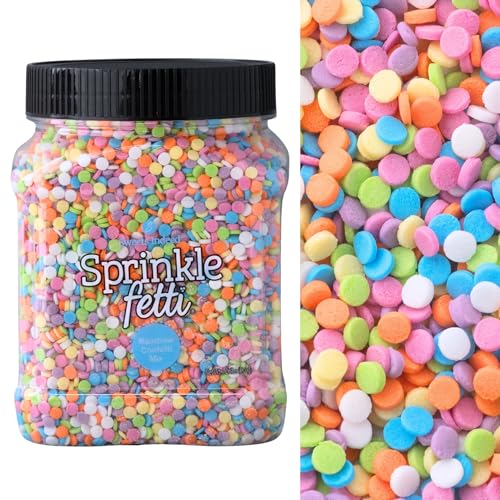
Bulk Rainbow Sprinkles: Large 1.2 lb tub provides plenty of colorful confetti sprinkles for frequent baking, parties, events, bakeries, and dessert decorating.
7. Naked Cakes

A naked cake skips the outer frosting entirely, which means the one skill that terrifies most home bakers, smoothing a flawless coat, never enters the picture.
What shows instead is a thin layer of buttercream pressed between each layer, visible from the side as a neat stripe. The look is deliberate rustic, not failed attempt.
Colorful fillings do the visual work here. Lemon curd, raspberry jam, and chocolate ganache each read clearly through that exposed edge, and the brighter the filling, the more the bare cake walls frame it like a window.
A pale vanilla buttercream against yellow cake disappears; a vivid jam or dark ganache against the same cake announces itself before the first cut.
The finish should look like you stopped early on purpose.
A few crumbs in the buttercream stripe, a slight lean to a layer, a knife mark on the cake surface: these read as intention in a naked cake, as error in a fully frosted one.
That tolerance for imperfection is what makes this style practical for a weeknight birthday, not just a styled shoot.

Affordable Piping Bags Combo: Package include 100 x disposable pastry bags, 1 x silicone pastry bags, 12 x stainless steel decorating tips, 3 x plastic scrapers, 1 x frosting couplers, 2 x piping bag ties. No matter your pro or novice, this affordable pack could meet your need.
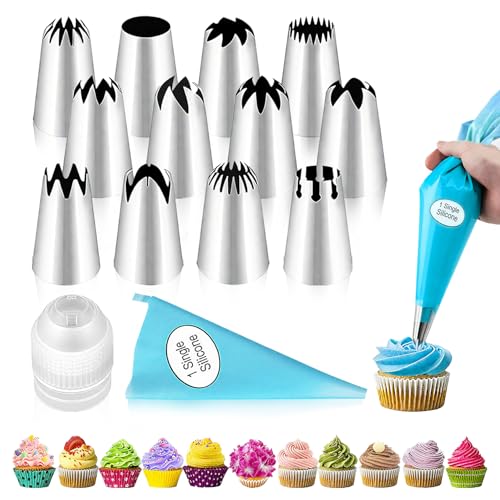
Complete Decorating Kit:Includes 12 nozzles + 1 reusable bags + 1 converter.

Essential Cake Decorating Kit: 16 numbered stainless steel piping tips, 100 disposable pastry bags, 1 reusable piping bag, 2 reusable couplers, 2 bag ties, and 3 cake scrapers. With just a few key decorating tools, you'll be able to make cake decorating a piece of cake.
8. Ice Cream Cakes

An ice cream cake is the no-bake answer for summer birthdays when even preheating feels like too much.
You build it from store-bought containers pressed into a springform pan with a cookie-crumb crust made from crushed Oreos or vanilla wafers mixed with a little milk.
Layer in two flavors if you want the ombre effect, or keep it single-note. The freezer does the actual work over about 4 hours, so this is a make-ahead project by necessity, not just convenience.
Decorate with whipped cream and candy right before serving. Candles are trickier to plant than in a buttercream cake, but no one I know has ever complained once the slices hit the plate.
The whole thing is naturally gluten-free if you pick a crumb base without wheat, which matters less than you’d think until you’re feeding a crowd and suddenly it does.
This is one of the few birthday options where buying more components actually simplifies the result.
Four hours of passive time beats the 15 minutes of fridge assembly some no-bake cakes claim, but only because the freezer is doing what your oven refused.
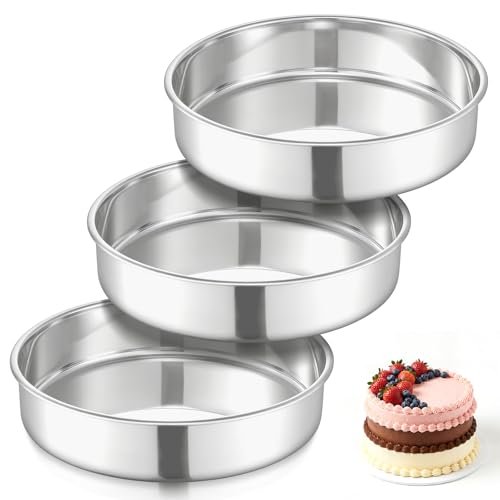
HEALTHY: E-far round cake pans are made of pure stainless steel without toxic materials, No harmful chemicals leaching into food, Unlike aluminum and Teflon coating pans, Healthy for your daily baking use

Ideal for any recipe - Designed for round tiered and layered cakes, and deep-dish pizzas.

🎂【9 INCH ROUND TAPERED SIDES PANS】You will get 3 pieces aluminum round cake pans. Perfect to bake 1 - 3 large cakes for several persons at a time and allows you to bake a wider variety of desserts, saving your baking time. Friendly reminder: This solid bottom cake pan isn't straight-sided; the sides are slightly angled outward to make it easier for the cake to come out clean.
9. Cookie Cake
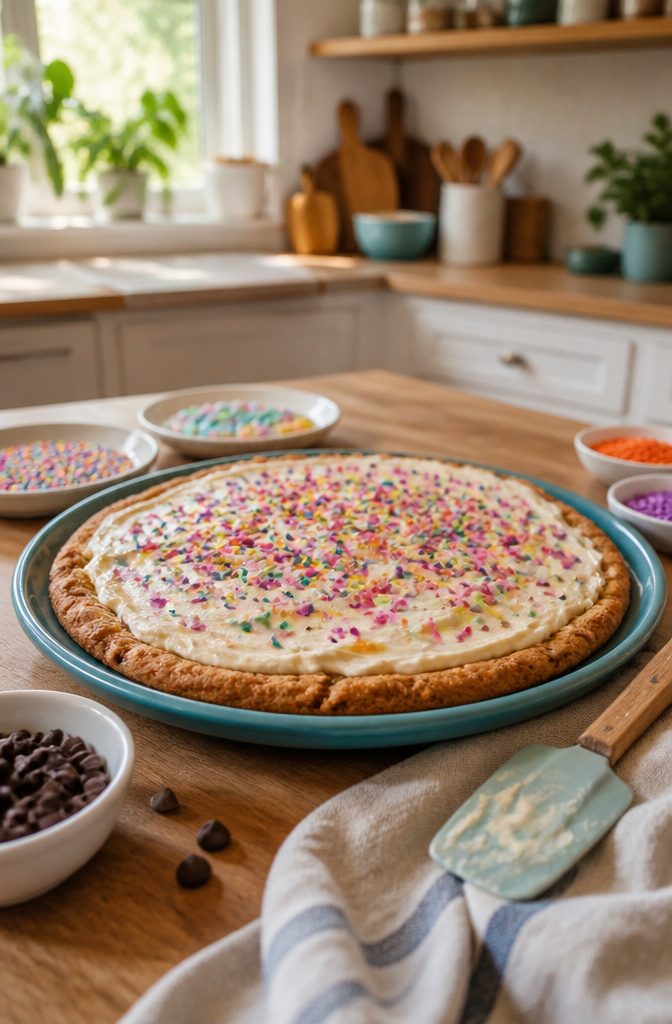
A 40-minute cookie cake solves the birthday problem when someone in the room just does not like cake.
Press standard chocolate chip cookie dough into a 12-inch pizza pan or a 9-inch round cake tin, keeping the layer thin enough to bake through without a doughy center.
It feeds 12 to 16 depending on how generous you slice, and the surface takes frosting and sprinkles exactly like a traditional layer cake.
The pizza pan wins for edge-to-center ratio and that wide, sliceable surface. A 9-inch round works if that is what you have, though the cookie comes out thicker and wants a few extra minutes in the oven.
Either way, let it cool completely before frosting or the buttercream slides right off into a greasy puddle.
For assembly, the sources split: one builds a single pressed layer and frosts it flat like a cake; the other stacks actual cookies with icing between them into a refrigerated mound you pull apart or slice.
The single baked layer is simpler, faster, and what I would hand to a crowd of kids who expect a candle moment.
The stacked version is more project than recipe, and the refrigeration step means planning ahead, which the 40-minute bake does not ask of you.


10. Ombre Cakes

An ombre cake reads as hours of technique, but the work is just four bowls and one bottle of food coloring.
Split a white cake mix into four batches, then tint each with a different amount of the same color. Stack them dark to light, and the gradient does the impressing for you.
Pale tones work best here. Pink, blue, and peach all shift gradually without turning muddy, while deep colors like red or purple tend to look striped instead of blended.
The effect also needs four layers, not three; the extra step gives the eye enough steps to read a true fade rather than a sudden jump.
Cleanup is the trade-off. Four bowls means four times the batter scraping, and if you own only two cake pans, you are baking in shifts.
For a weeknight birthday, I would rather do the extra dishes than pipe rosettes for an hour. The result looks considered, but the actual skill is reading a dropper.

STAINLESS STEEL & HEALTHY: The baking pan is made of food-grade pure stainless steel, No worries about any coating chipping or harmful chemicals releasing into your food, Healthier choice for your daily kitchen use, Great replacement to other coating or metal pans

Naturals commercial bakeware is made of pure aluminum which will never rust for a lifetime of durability. Foods bake and brown evenly due to aluminum’s superior heat conductivity

9 x 13 inch rectangular cake pan; made from aluminized steel; a mix of steel for strength and durability and aluminum for superior heat conductivity; oven safe to 450°F
11. Chocolate Shards

Chocolate shards are the fastest way to make a plain frosted cake look like it came from a pastry shop.
You melt chocolate, spread it thin on parchment paper, roll it up, and freeze it for about 10 minutes. Unroll and break into irregular pieces, then press those shards into the sides of the cake or cluster them on top.
The technique pairs naturally with a naked-frosted cake, where some of the sponge shows through, since the dark chocolate reads as intentional contrast rather than camouflage.
You are adding roughly 15 minutes of active time, and the only equipment needed is a baking sheet and parchment paper. A double boiler works for melting, though a microwave set to short bursts does the same job with less cleanup.
You have to watch the temperature. Chocolate shards start softening the moment they leave the freezer, so I would plan to apply them within a few minutes of breaking them, especially if the kitchen runs warm.
Press them firmly into buttercream and they will hold their place without additional support.
12. Edible Flowers

Edible flowers are the fastest way to turn a plain frosted cake into something that looks intentional. Pansies, violas, nasturtiums, and bachelor buttons are the ones reliably stocked in grocery store produce sections, usually near the fresh herbs.
Rinse them gently, pat completely dry, and press directly into buttercream while the frosting is still soft enough to hold them. No piping tips, no fondant work, no second trip to a specialty store.
Organic flowers matter here, since the petals will be eaten as-is. If your grocery store doesn’t label them organic, check the farmer’s market during growing season, or grow your own if you have the space and lead time.
The flowers do every bit of the visual work, so arrangement is forgiving: cluster them toward one side for a modern look, or scatter across the whole surface for something more traditional.
Either way, the total active time is under five minutes, and cleanup is just the plate you set them on.
13. Fruit Decorations
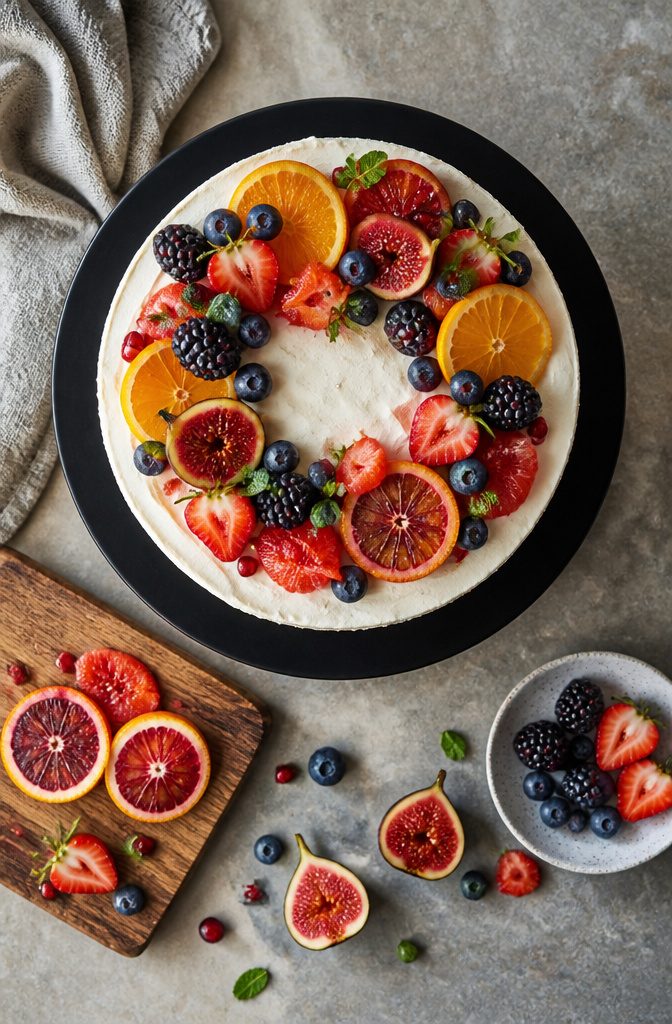
Fresh fruit is the fastest way to make a plain frosted cake look like you planned ahead. Berries, citrus wheels, fig halves, or pomegranate seeds sit on top of buttercream in whatever pattern makes sense for the occasion.
I arrange them in concentric rings when I want order, or scatter them toward one edge when I want something that looks modern and loose.
The acidity matters as much as the color. Sweet buttercream needs something sharp against it, and fruit delivers that without any extra work on your part.
Arrange the fruit just before serving or the juices will bleed into the frosting and the berries will soften where they touch the cream.
For a cake that sits out during a party, I skip sliced strawberries and raspberries entirely. They collapse fastest.
Blueberries, blackberries, and citrus segments hold their shape for an hour or two without looking tired. Pomegranate seeds buy you the most time, though they scatter everywhere the moment someone cuts the first slice.
14. Piñata Cake

A piñata cake hides a hollow center packed with candy that spills out when the first slice drops, which is the only decoration that actually matters.
The method is straightforward: bake two standard layers, use a round cutter to punch out a circle from the center of one, then stack them with frosting as glue.
That missing circle becomes the cavity you fill with whatever small sweets you have on hand.
Five hours is the full time commitment, though most of that is cooling and set time. The frosting between layers needs to stiffen enough to hold the weight, so rushing the chill is where this project falls apart.
I would skip anything too fussy on the outside; a plain coating of buttercream keeps the focus on the reaction when the knife goes in.
This is a crowd-pleaser worth the extra steps, though it works best for kids old enough to enjoy the reveal without expecting a sculpture on top.
For a weeknight birthday, this delivers the memorable moment without requiring a piping bag or fondant skills you do not have time to practice.
15. Texas Sheet Cake
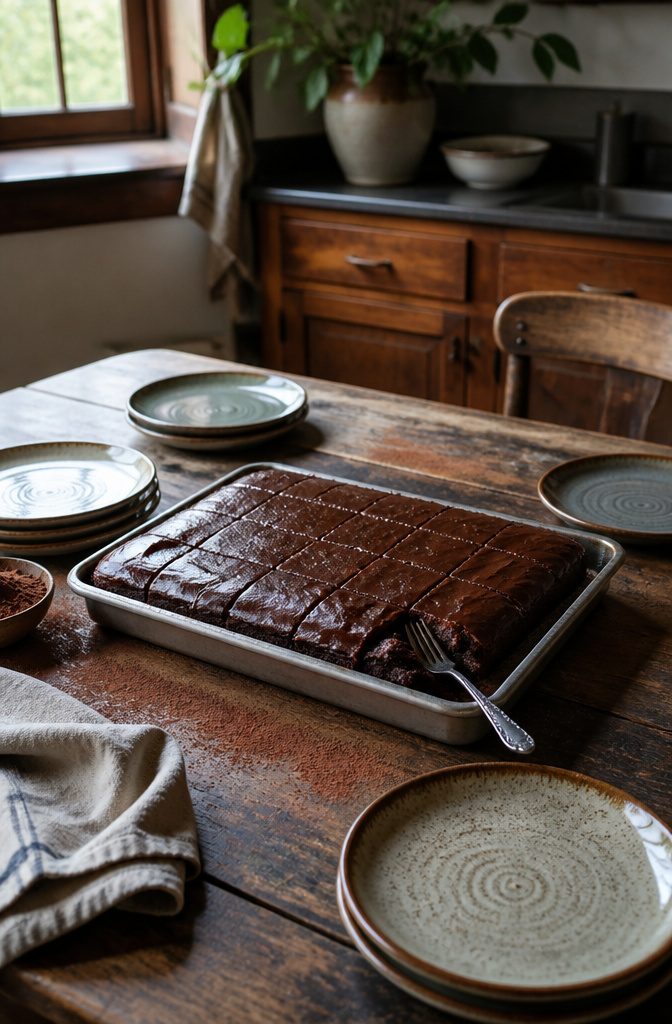
Texas sheet cake solves the birthday problem when you need to feed a crowd and do not want to stack layers.
A standard jelly roll pan bakes the whole thing in about twenty minutes, and the poured icing goes on while the cake is still warm, which saves the wait time that trips up most frosted cakes.
The heat lets the chocolate glaze sink slightly into the top and then set to a thin crackle as it cools, so you get a crust that shatters when you cut it without any piping bag or offset spatula work.
Buttermilk in the batter is the detail that keeps the crumb tender instead of dense, since a thin cake can dry out fast if you are not careful.
The classic version feeds about twenty from that single pan, which means one bake, one frosting, and no layer assembly at all. Cleanup is the pan, the saucepan you melted the icing in, and a bowl.
For a weeknight birthday or a party where you are also making dinner, that efficiency is hard to beat, though you do not get tall slices for candles. The cake sits low and wide, so plan your candle placement accordingly.
16. Super-Moist Yellow Cake

Oil keeps the crumb softer longer than butter ever will, and this yellow cake proves it.
The swap sounds small, but the texture difference is immediate: slices stay plush and bendable for days under a dome, where butter-based cakes turn to crumbly archaeology by day two.
Whole eggs give the structure, and that extra yolk folded in is where the richness lives. The batter bakes up flat-topped and golden, the kind of even surface that makes frosting a pleasure instead of a repair job.
16 oz of chocolate frosting is the classic move, though this cake has enough flavor to go plain with just a dusting of powdered sugar if you are feeding adults or running short on time.
I have served this to people who swear by their boxed mix, and the conversion rate is nearly total.
The ingredient list stays supermarket-basic, the cleanup is two bowls, and the result tastes like you tried harder than you did. A simple birthday cake should taste like something you want to eat, not something that survived a photo shoot.
17. Wacky Cake
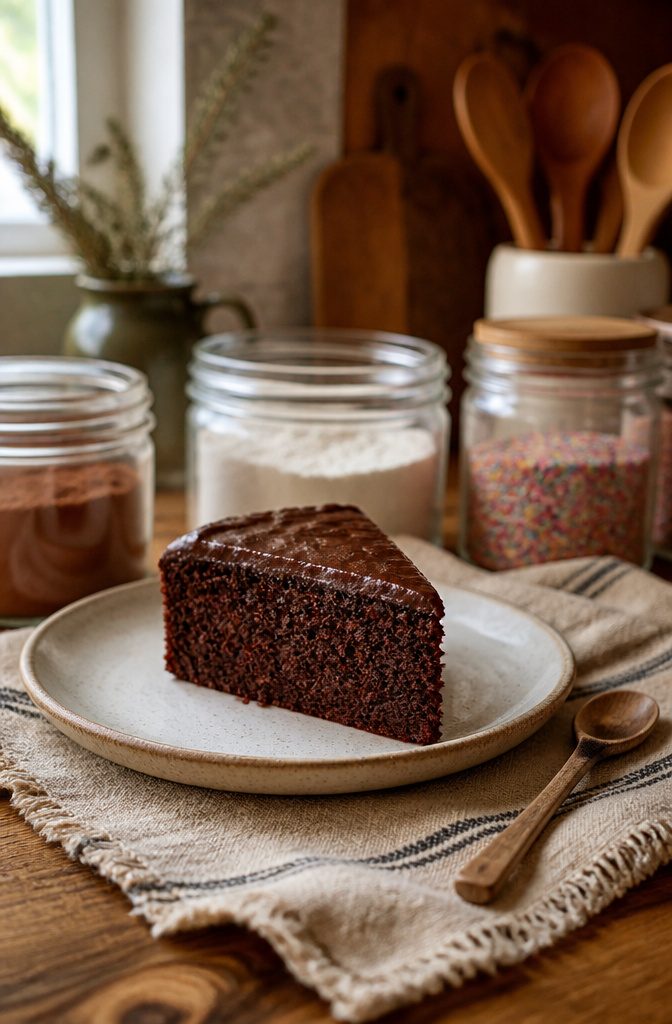
Wacky Cake is a no eggs, no butter, no milk chocolate cake that gets its rise from vinegar and baking soda reacting right in the batter.
The chemistry is sound enough that this Great Depression-era recipe still earns praise from home bakers today.
What makes it genuinely practical for a weeknight birthday is the pan method: you mix dry ingredients directly in the ungreased baking pan, make wells for oil, vinegar and vanilla, pour cold water over the top, and stir until just combined.
No bowl to wash, which matters more than it should on a Tuesday evening.
The crumb is lighter than you’d expect from a dairy-free cake, with a moist, tender texture that carries chocolate frosting well. Owners on Reddit mention baking it as "crazy cake" for years and pairing it with Bailey’s cream cheese frosting.
You lose the richness that butter provides, and the cake won’t have the tight, velvety crumb of an egg-based layer cake. For a casual birthday where the candles matter more than the crumb structure, that is a fair exchange.
18. Chocolate Peanut Butter Poke Cake

A chocolate cake mix bakes in 45 minutes total, and the real work happens once it comes out warm.
You poke holes across the top with the handle of a wooden spoon, then pour thinned peanut butter over the surface so it seeps into every opening.
Those holes become veins of filling that stay soft even after the cake cools, which is exactly why you poke it.
The condensed milk in the peanut butter mixture keeps the crumb from drying out, and a layer of chocolate frosting on top seals the moisture in.
The boxed mix is the right call here.
A scratch chocolate cake would fight the peanut butter instead of sinking under it, and the denser grocery-store crumb holds the tunnels better anyway. If the pantry only has white or yellow mix, stir in 3 tablespoons of baking cocoa.
The frosting covers the color difference, and the peanut butter does most of the flavor work. Serves 20, which is generous for most home birthdays, but the leftovers freeze well sliced into squares.
19. 7UP Pound Cake

A can of 7UP or Sprite does the work of baking powder plus milk or buttermilk in this old Southern shortcut.
The carbonation disperses tiny bubbles through the batter as it bakes, giving you a finer, tighter crumb than chemical leavening alone manages. I find the lemon-lime flavor stays subtle, more a bright background note than something that reads as soda.
Bake it in a standard Bundt pan or a couple of loaf pans, depending on what you have. The cake comes out dense and moist, the kind that keeps well on a counter under a dome for several days.
For the glaze, I mix powdered sugar with a few tablespoons of the same soda until it pours in a thick ribbon. It sets to a crackly, translucent shell that contrasts with the soft crumb underneath.
The slight tartness keeps the sweetness from flattening out, which is why I reach for this over a standard vanilla glaze whenever I want something that looks more considered than the effort actually was.
20. Chocolate Icebox Cake

Chocolate icebox cake belongs in the rotation for anyone who needs a birthday dessert without turning on the oven.
Nabisco Famous Chocolate Wafers, or the store-brand equivalent stacked right beside them, form the structure: you spread whipped cream between layers of cookies, stack them into a log or stand them upright in a pan, and let the whole thing rest overnight in the refrigerator.
The wafers absorb moisture and soften into something that slices like cake, which is exactly why the method works.
The active work takes about 15 minutes. The source materials note a total active time under 30 minutes, so even if you move slowly or make a second batch of cream, you are still out of the kitchen quickly.
No specialty pans, no rotating stand, no piping bags. A hand mixer or even a whisk gets the cream to stiff peaks, and a spatula does the rest.
This is a make-ahead dessert by necessity; it needs those hours in the cold to become itself. For a summer birthday when the kitchen is already warm from grilling burgers, that timeline is an advantage rather than a constraint.
Candle placement is slightly awkward on a log-shaped cake, but no one has ever refused a slice because of it.
Frequently Asked Questions
What type of cake is best for birthdays?
The best birthday cake depends on who you are feeding and how many.
Chocolate or vanilla are the safest defaults when you do not know the guest of honor’s preference, and a single layer works for small groups while a sheet cake feeds a crowd without any stacking.
How do you make a simple birthday cake?
Start with a boxed yellow cake mix, add one extra egg to tighten the crumb, and fold in a tablespoon of rainbow sprinkles before baking at 350° F for 30 minutes.
Total time is about 4 hours, but only 45 minutes of that is actual work; the rest is cooling so your frosting does not slide off.
What are some easy cake decorating ideas?
Press edible flowers into soft buttercream, arrange fresh fruit just before serving, or make chocolate shards by spreading melted chocolate on parchment, rolling it up, freezing for 10 minutes, and breaking the pieces onto the cake.
Each takes under 15 minutes of active time.
What are some different types of birthday cakes?
Styles range from no-bake and dairy-free to layered and decorated.
What is the 1234 rule for cake?
It focuses on specific recipes and shortcuts rather than universal formulas.
Where can I get an affordable birthday cake?
Every option listed is made at home, with most built from supermarket ingredients and standard pans you already own.
What are the ingredients for an easy cake recipe?
The simplest recipe in the list is Wacky Cake: flour, sugar, cocoa, baking soda, salt, vegetable oil, white vinegar, vanilla, and cold water.
No eggs, butter, or milk, and you mix it right in the ungreased baking pan so there is no bowl to wash.