You can leave most cakes out at room temperature, but it depends on what’s inside. Plain or frosted cakes stay fresh 2–5 days at 70–72°F if you cover them well. Frosting acts like a seal, keeping moisture locked in.
Cakes with dairy fillings, whipped cream, or fresh fruit must go straight to the fridge at 40°F or below, and don’t leave them out more than two hours when it’s warm.
Wrap unfrosted cake tightly in plastic, and use a dome or upside-down bowl for frosted ones.
If you need to keep cake longer than a few days, freezing works great for up to four months.
When It’s Safe to Leave Cake Out Overnight (and the Ideal Temperature)
Wondering how long you can safely keep cake on the counter? This question puzzles many home bakers.
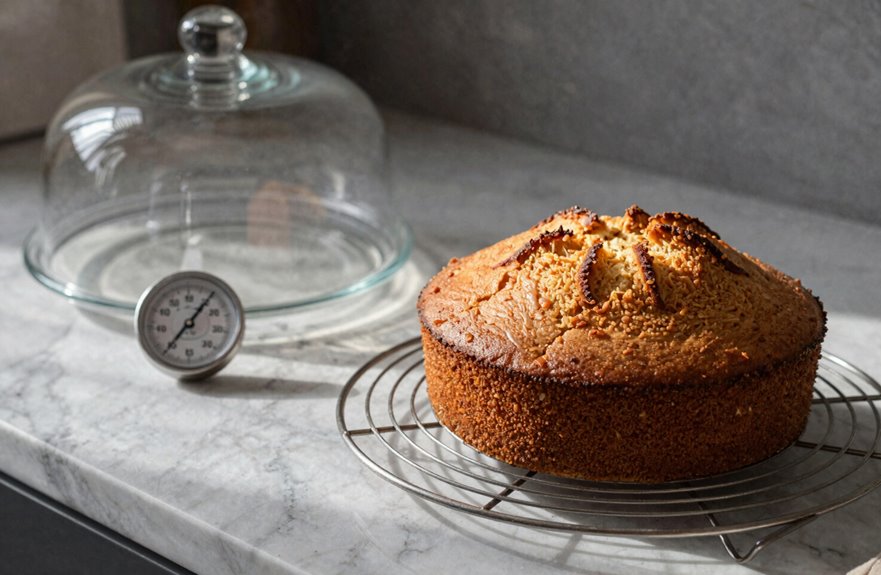
Frosted cakes stay fresh at room temperature for 4–5 days when your kitchen sits around 70–72°F. The frosting creates a protective seal, locking in moisture better than exposed cake surfaces. Cover your cake with a dome or inverted bowl overnight to shield it from odors and drying air.
However, refrigeration becomes necessary when heat or humidity rises, especially with dairy-based frostings or fruit fillings. These ingredients spoil faster, so don’t leave perishable cakes out beyond 2–3 hours in warm conditions. Your cake’s safety depends on what’s inside and how hot your kitchen gets.

Elegant Display - Elevate your bakes with the Homesphere acacia wood cake stand with lid. This generous 12 in large cake stands with dome lid is designed to showcase bakes up to 4" tall, turning them into a true masterpiece

Elegant Display - Elevate your bakes with the Homesphere acacia wood cake stand with lid. This large rectangle cake stand with dome lid is designed to showcase all bakes, pastries, and goodies up to 4" tall, turning them into true masterpieces

6-IN-1 MULTIFUNCTIONAL SERVING DESIGN – Transforms from a cake stand with dome into a covered cake plate, punch bowl, chip and dip server, fruit platter, salad bowl, and elegant dessert display for complete versatility.
How Long Unfrosted Cake Stays Fresh at Room Temperature

Unfrosted cake typically stays fresh at room temperature for about two to three days, so you’ll want to plan your baking accordingly. You can extend this window slightly depending on your cake type and how you store it. Oil-based cakes stay moist a day or two longer than butter-based ones. The key is using proper wrap or covering to lock in moisture.
To keep your unfrosted cake fresh:
- Wrap your cooled layers tightly in plastic wrap, pressing out air
- Cover your unfrosted cake with foil if you run out of plastic
- Store your wrapped cake on the counter, away from sunlight and heat
- Check your cake daily to monitor when it starts drying at the edges
If you need more than three days, you’ll need to move beyond room temperature storage options.

PRESS'N SEAL PLASTIC FOOD WRAP: With a quick press and glide, this food wrap keeps food fresh with a leak proof, air tight seal making it the ultimate storage solution; packaging may vary

Plastic Food Wrap: Add our plastic food wrap to your household items to extend food freshness with a tight seal

CLING WRAP WITH SLIDE CUTTER-Contains one roll of Reynolds Quick Cut Plastic Wrap with slide cutter, measuring 225 feet long by 12 inches wide (225 square feet)
Why Frosted Cakes Last Longer Left Out

You’ll notice frosted cakes stay fresh longer on your counter than bare ones because the frosting acts like a seal. The sugar and fat in buttercream or ganache create a barrier that locks moisture inside your cake, keeping it soft for 4 to 5 days at around 70°F. When you store it under a cake dome or overturned bowl, you’re protecting that barrier from air and odors, so your cake keeps its tender crumb without drying out or getting stale.

【4 Compartments Lunch Box】The bento box is designed 8.9*6.4*2.6 inches, 1300ml with 4-compartment that can separate different foods like basic food, fresh fruit, vegetables, snacks etc. It’s great to get a balanced diet and maintain the original flavor of the food. Perfectly portioned for not only the appetite of kids but also adults.


FOOD-GRADE MATERIAL: We put your health first, and made this cake carrier with food-grade PP material, ensuring you and your food stay healthy, fresh and safe for all your friends and family!
Frosting Seals Moisture
Because frosting creates a protective seal around your cake, it actually keeps the dessert fresher longer when you leave it out on the counter. The frosting moisture locks in, stopping your cake from drying out and cracking. You’ll get buttercream stability for four to five days in a cool spot, making room temperature storage your best option for texture and taste.
- Your cake stays soft, not stiff from refrigeration
- You skip the wait; no two-hour warm-up before serving
- Your kitchen smells like fresh-baked goodness longer
- You maintain proper food safety and serving quality
When it’s hot or your frosting is dairy-heavy, like cream cheese, you’ll want to chill it instead.
Barrier Protects Texture
Frosting does more than make your cake look pretty. It works like a shield by creating a moisture barrier that locks in softness and keeps air from drying out your cake. When you leave your frosted cake at room temperature, this barrier stays intact and protects the crumb from becoming stale or tough.
You’ll notice unfrosted edges turn dry and crumbly within a day, but frosted surfaces stay tender for 2–3 days. With sturdy buttercream or fondant, your cake can last 4–5 days on the counter. The moisture barrier slows down moisture loss, so your cake keeps its fresh-baked texture longer.
Cover your cake with a dome or container to guard against dust and odors. When you serve, the protected texture preserves the cake’s soft crumb structure and fresh taste.
Room Temperature Benefits
Why does a frosted cake actually last longer on your counter than in the fridge? When you store frosted cakes at room temperature, the frosting creates a protective seal that locks in moisture. You get 2–3 days of moist, appealing cake, and up to 4–5 days if you cover it well.
- You keep the soft, tender crumb that cold air steals away
- You skip the two-hour wait to warm your slice back to life
- You protect your cake with a simple bowl or cake dome
- You extend shelf life without fighting fridge odors and dryness
In cooler homes, your room temperature window stretches even longer. Just watch dairy-heavy frostings, and you’ll discover that counter storage prevents moisture loss and texture degradation that refrigeration causes.
Which Cakes Must Go Straight to the Refrigerator
You’ll need to refrigerate cakes with dairy-based fillings, fresh fruit, or whipped cream frosting right away. These ingredients spoil quickly at room temperature, so don’t leave them out for more than two hours. Keep them cold, and they’ll stay safe and tasty for three to five days.

One 16 oz can of Duncan Hines Creamy Cream Cheese Frosting

Eight 14 oz cans of Duncan Hines Whipped Cream Cheese Frosting

OREO CRÈME FROSTING: Irresistible whipped frosting inspired by the center of an OREO Cookie; Tastes great on gluten free cakes, cupcakes, cookies and more
Dairy-Based Fillings
Since dairy products can spoil quickly at room temperature, refrigerate any cake containing custard, cream cheese, or whipped cream toppings right away. Dairy fillings like curd or mousse require refrigeration to prevent foodborne illness.
What to remember about storing these cakes:
- Wrap unfrosted cakes with dairy fillings and chill them if you’re not serving within two hours
- Keep cream cheese frosting cold so it stays creamy and doesn’t slump off your cake
- Let fully frosted dairy cakes sit out no more than 2–3 days before refrigeration extends their life
- Move your cake to the fridge fast when it’s hot outside or when you’re waiting to serve
Proper refrigeration prevents spoilage and keeps every slice safe to eat.
Fresh Fruit Components
Where should you put a cake covered in juicy strawberries or mango slices? Place it straight into the refrigerator. Fresh fruit brings moisture and sweetness, but it also creates food safety risks. Without refrigeration, you’re risking spoilage, mold, and fermentation.
| What Happens | Why It Matters |
|---|---|
| Bacteria multiply fast | Your cake becomes unsafe to eat |
| Fruit turns mushy | Texture gets weird and sad |
| Fermentation starts | You’ll smell something off |
| Moisture evaporates | Cake dries out, fruit wrinkles |
Get your fresh fruit cake chilled within two hours of decorating. Set your fridge to 40°F or below. When you’re ready to serve, pull it out and wait 20–30 minutes. This wait allows the flavors to fully develop, so each bite tastes fresh and vibrant.
Whipped Cream Frostings
How quickly does whipped cream frosting turn into a melty mess? Faster than desired, especially on warm days. Whipped cream frosting requires refrigeration for food safety and stability. Room temperature storage beyond two hours risks spoilage and structural collapse.
What fellow bakers have learned:
- Chill your cake immediately after frosting, within 30 minutes
- Cover tightly with plastic wrap or a cake dome before refrigerating
- Let the cake sit out 30 to 60 minutes before serving for the best taste
- Eat within 1 to 2 days for peak freshness
Refrigeration preserves both the appearance and quality of your frosted cake while preventing bacterial growth. Your guests will receive a safe, delicious dessert, and you’ll avoid potential food safety issues.
How to Wrap Cake for Room-Temperature Storage
What’s the best way to keep your cake fresh without chilling it? You have solid options for room-temperature storage that lock in moisture protection without much fuss.
For unfrosted cakes, wrap them tight in plastic wrap. Press it right against the sides so no air sneaks in. This keeps your cake soft for 3 to 5 days. No wrap on hand? Grab a cake dome or flip a large bowl over the top. Both methods work equally well.
Frosted cakes need gentler care. Skip the plastic and use a dome or inverted bowl instead. You will get 4 to 5 days of freshness this way. If you are really stuck, double-wrap with plastic then foil, or use an airtight cake keeper. Your cake stays moist and maintains its quality.

Freezer Paper Roll: Contains one 100 square foot roll of Reynolds Kitchens Plastic Coated Freezer Paper, measuring 66-2/3 feet x 18 inches

This package contains two 75 square foot roll of Reynolds Kitchens Plastic Coated Freezer Paper, measuring 16-2/3 yards x 18 inches
How to Store Cake That’s Already Been Cut
Why does sliced cake go stale so fast? Once you cut into that beautiful cake, air rushes to the exposed edges and steals moisture. You’re watching your dessert dry out before your eyes, but you have easy fixes.
Here’s how to save your slices:
- Press extra frosting onto cut sides like a sweet seal
- Wrap unfrosted sections tight with plastic to block air
- Use a cake keeper or upside-down bowl for room-temperature guarding
- Let refrigerated pieces warm up before eating for soft texture
You can keep cut cake out for 3–4 days if it’s not too humid. When refrigeration is needed, like with dairy fillings or hot weather, always wrap well first. Proper storage prevents moisture loss and extends the cake’s freshness significantly.

【Multi-Purpose Use】:6 IN 1 multi-function cake stand is a unique cake rack with multiple functions and uses. Use it as a cake plate, a serving plate, a punch bowl, a fries and salsa plate, a salad bowl and a bakery stand. Simply turn the dome or the plate upside down to make any type of plate.
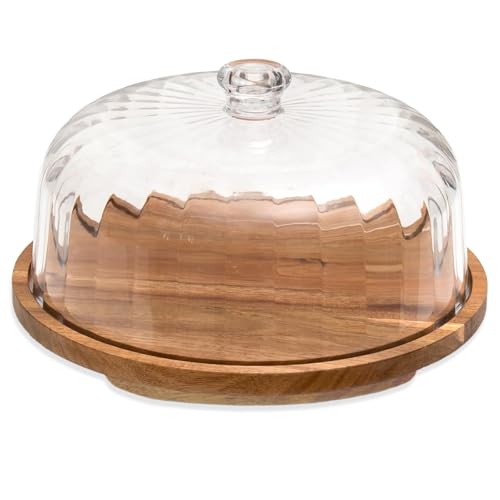
High - Quality - The beautiful serving tray is made from 100% High - Quality acacia wood cake stand with lid. Made with a degree of thickness and structural integrity which makes its a strong, durable, and long-lasting purchase that you can use for years to come.The grooves stop juices or other liquids from flowing out of the Tray.

【 Complete Cake Display Set 】 This 5-piece combo pack includes five 10" black trays, five clear high dome lids, and five 10" corrugated white cake boards, providing everything you need to elegantly showcase your delicious cakes.
When to Freeze Cake Instead of Refrigerating
You should freeze your cake when you need to keep it fresh for longer than a few days. Let your cake cool completely on a wire rack, which usually takes one to two hours at room temperature. Wrap each layer tightly in plastic wrap twice, write the date on the label, and freeze for up to four months.

SHIPMENT CONTAINS: 3 rolls of 100 ft plastic food wrap, 33.3 yards x 12 inches each roll, totaling 300 sq ft

Help Protects Your Food: The wrap keeps your food protected while letting you see exactly what you’ve stored at a glance.

Size information:The size of each treat bag is 3.1 x7.5 inches/8 x 19 cm.And it is made of high-quality cellophane plastic material, which is not easy to break or deform, lightweight and reus
Cool Cakes Completely First
Before you wrap up your cake for the freezer, you need to let it cool all the way down. You’ve got to cool cakes until they reach room temperature, or you’ll trap steam inside that ruins texture. Skipping this step invites condensation, soggy layers, and disappointment.
Here’s what happens when you’re patient:
- Your cake keeps its perfect crumb instead of turning gummy
- You avoid weird ice crystals that form from trapped heat
- Your flavors stay rich and true, not diluted by moisture
- You protect your hard work from fridge-then-freezer shock
Take the time. Let it sit on a wire rack for one to two hours. Touch it; if it’s still warm, wait longer. Proper cooling prevents the texture degradation that rushing creates, resulting in a slice that tastes bakery-fresh months later.
Wrap for Long-Term Storage
If you’re not planning to frost or serve your cake within a few days, freezing is superior to refrigerating. You preserve freshness that room temperature or refrigerator storage cannot match. First, cool your layers completely. Never freeze warm cake, or you will trap moisture and compromise texture. Then wrap each layer tightly in plastic wrap twice, sealing out air completely. Label with the cake type and date so you know what you’ve got. For leftover slices, freeze them on a baking sheet first, then wrap individually and bag them. Move wrapped layers to the refrigerator one day before decorating so they thaw evenly.
| Task | Timeline |
|---|---|
| Cool completely | Before wrapping |
| Double-wrap layers | Tight, no gaps |
| Label and date | Every package |
| Freeze slices on sheet | 1–2 hours first |
| Thaw in refrigerator | 24 hours ahead |
Freeze Within Four Months
Although freezing takes a bit more work than popping a cake in the fridge, it’s your best option when storing layers for more than a few days. You’ll lock in freshness by wrapping cooled layers twice in plastic wrap, then labeling them with the date and cake type. Your frozen storage keeps treats in peak condition for up to three to four months.
Follow these steps for frozen storage:
- Cool layers completely before wrapping; never freeze while warm
- Double-wrap tightly to block freezer burn and odors
- Label every package so you know what’s inside and when you froze it
- Move layers to the refrigerator one day ahead for gentle thawing
Cakes stored this way will taste freshly baked when you decorate them.
How to Thaw Frozen Cake Without Drying It Out
Thawing a frozen cake takes patience, but you’ll keep every bite moist and tender if you follow the right steps. For proper moisture preservation, start thawing in the refrigerator overnight. This slow method lets the center and exterior soften evenly, so you won’t get icy pockets or mushy spots.
If you’re short on time, you can speed things up at room temperature. Leave your frozen frosted cake wrapped, and give it about one hour per inch of thickness. Keep it covered while it thaws, then unwrap and let it sit out before serving. This traps moisture inside.
Individual slices thaw faster. Plan for 30 to 60 minutes wrapped at room temperature, depending on thickness. Never rush thawing with heat, or you’ll create soggy icing from condensation.

Store, freeze, and transport pies, cakes and pizza securely with this lidded container

✅EASILY FITS ANY 9 INCH CAKE: Total size is 11.5 inch diameter 6 inch high. White stand has 11 inch diameter. Big enough to fit most 10 in cakes

2 Pack - Rectangular plastic food storage containers
Why the Fridge Dries Out Cake (And How to Prevent It)
Why does your cake turn crumbly after a night in the fridge? Refrigeration pulls moisture from your cake, especially unfrosted layers, leaving you with dry, disappointing bites. Cold air circulating inside your refrigerator acts like a sponge, drawing out the tender crumb you worked hard to create.
Cold air acts like a sponge, drawing out the tender crumb you worked hard to create.
You can outsmart this problem with simple steps:
- Wrap unfrosted layers tightly in two layers of plastic wrap before refrigeration
- Let buttercream seal your cake’s edges, since frostings act as moisture barriers
- Keep your kitchen cake on the counter for 2–3 days when temperatures stay below 70°F
- Give refrigerated frosted cakes two hours at room temperature before you serve
Proper storage techniques directly extend your cake’s shelf life and preserve its texture quality.


The information below is per-pack only

The information below is per-pack only
How to Refresh Cake That’s Been Stored Too Long
Even the best-stored cake can lose its magic after a few days, but you don’t have to settle for a dry dessert. You can bring your cake back to life with a few simple tricks.
First, let your cake sit at room temperature for 1–2 hours. This helps the crumb soften naturally. For an unfrosted cake, brush on a light simple syrup, which is made by mixing equal parts sugar and water, warming until dissolved, then cooling before using. This moisture restoration technique seeps into the cake without making it soggy. If your cake has frosting, add a thin fresh layer to lock in softness.
| Cake Type | Refresh Method | Time Needed |
|---|---|---|
| Unfrosted cake | Brush with simple syrup | 10 minutes |
| Frosted cake | Add thin glaze layer | 15 minutes |
| Cold-stored cake | Thaw, then room temperature rest | 2–3 hours |
Skip the oven since heat changes texture. Gentle, patient methods produce the best results.
Signs Your Room-Temperature Cake Has Gone Stale
Once you’ve refreshed a cake or stored it on your counter, you’ll need to know when it’s past its prime. At room temperature, even with good frosting preservation, your cake won’t stay perfect forever. Watch for clear signs that indicate it’s time to discard it.
- Your cake feels hard and dry when you press it gently with your finger.
- The crumb looks shrunken, and the edges pull away from the pan sides.
- The frosting cracks or turns greasy instead of staying smooth and soft.
- You smell something off, like sour milk or a musty, old-bread odor.
If you spot these changes, your cake has gone stale. Discard it and bake a fresh one.