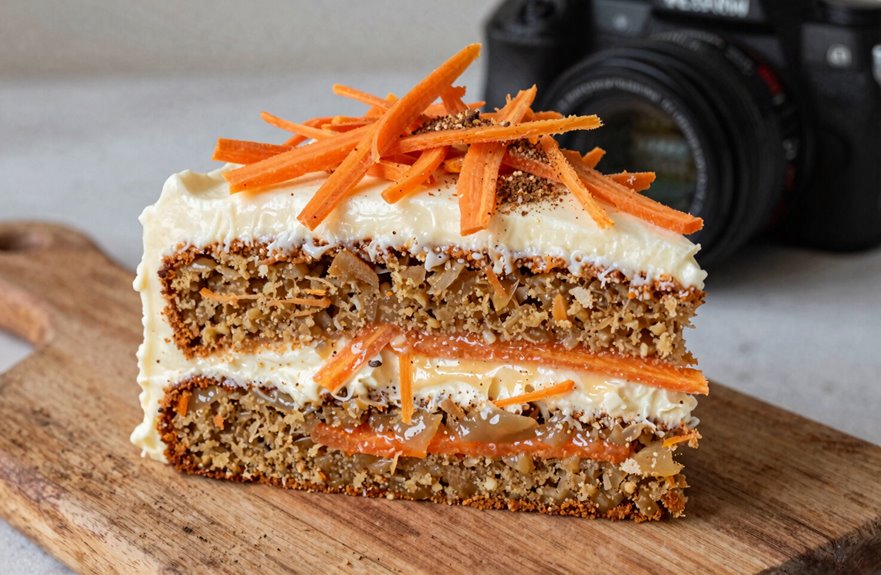
You make carrot cake gluten-free by swapping wheat flour for a 1:1 gluten-free blend that includes xanthan gum, which binds your batter and mimics gluten’s stretchy structure without any wheat at all. You’ll also need to check labels on baking powder, spices, and oats since hidden gluten lurks in thickeners and shared processing equipment. Grated carrots, applesauce, and oil keep your cake moist, while a thin sheet layer bakes in about 35 minutes at 350°F. Watch for cross-contact with regular bakeware, and cool completely before frosting so your crumb stays firm. Maintaining a gluten-free kitchen requires attention beyond just swapping flour.
What Makes Carrot Cake Gluten-Free?
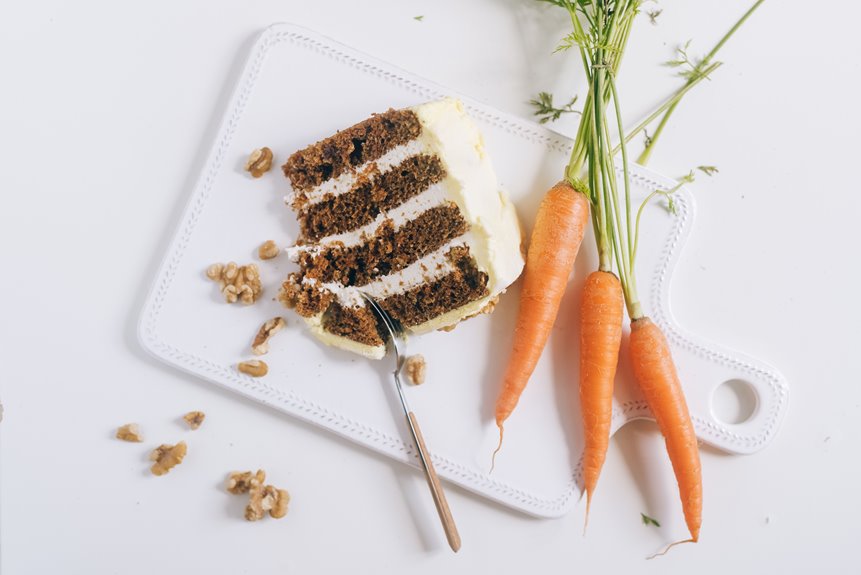
Why does a gluten-free carrot cake still hold together so well? You’re using a gluten-free flour blend that already contains xanthan gum, or you’re adding this binder yourself. These binders replace gluten’s job, giving your cake structure and holding everything in place.
You mix shredded carrots into your batter, and they bring natural moisture that keeps each slice tender. You’re not just swapping flours; you’re building a new foundation that works. Watch for cross-contamination by checking labels and using clean bowls.
You can easily make this a dairy-free option too, swapping butter for oil or plant milk. Your finished cake tastes like the classic, with the same spice and warmth. Gluten-free baking requires attention to ingredient quality and proper mixing techniques to achieve results comparable to traditional recipes.

Versatile Baking: Perfect 1:1 substitute for wheat flour in non-yeasted recipes, ideal for gluten-free cookies, cakes, muffins, and pancakes. Simplify your gluten-free baking with this all-purpose flour alternative.

King Arthur Gluten Free Flour is ideal for all gluten-free recipes, our carefully tested blend of white rice flour, whole grain brown rice flours, tapioca starch, and potato starch yields baked goods with no grittiness or aftertaste
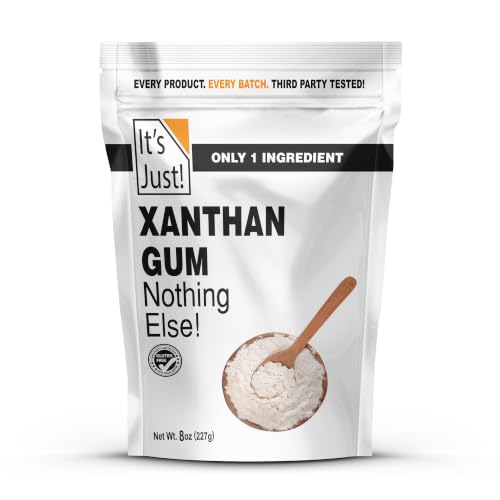
It's Just - Xanthan Gum, 8oz, Batch Tested Gluten Free, Keto Baking, Non-GMO, Thickener for Sauces, Soups, Dressings, Packaged in USA
Hidden Gluten Sources in Traditional Carrot Cake Recipes
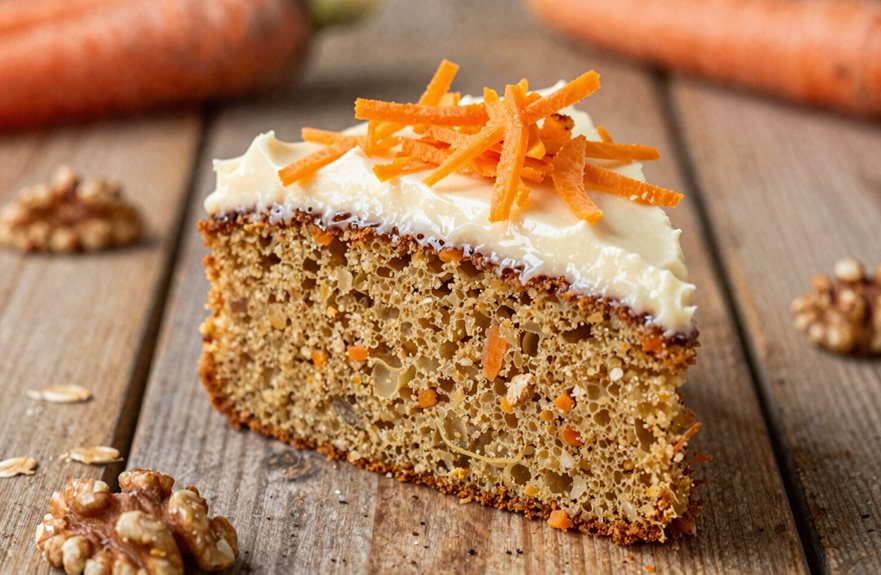
You have figured out how to make a gluten-free carrot cake that stays together and tastes great, but now you need to watch out for sneaky places where gluten hides. When you scan recipes, you spot hidden gluten in thickeners, malt flavorings, and spice blends. You check every label twice. You grab oats labeled gluten-free, not the regular kind, because cross-contamination lurks in shared mills. You mix your gluten-free flour blend carefully, adding xanthan gum if it lacks binders. You swap dairy-free frosting, but you still inspect for wheat-based stabilizers. Gluten-free baking demands this vigilance. You belong to a community that reads labels like detectives, and you protect your kitchen from traces that will compromise your cake.
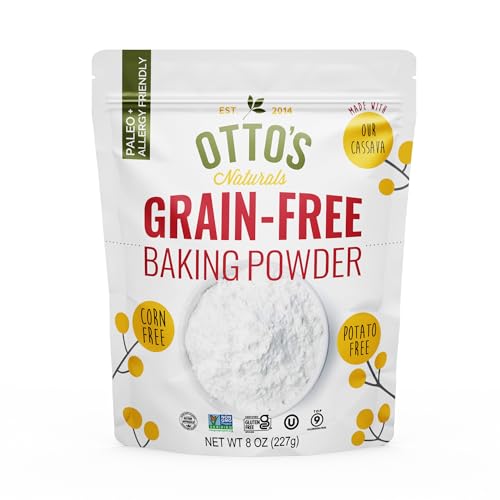
100% Grain-Free, Corn-Free & Nightshade-Free (Potato-Free): Otto’s baking powder is made without grains, cornstarch, or potato starches, offering a cleaner, allergen-friendly alternative for your family’s favorite bakes
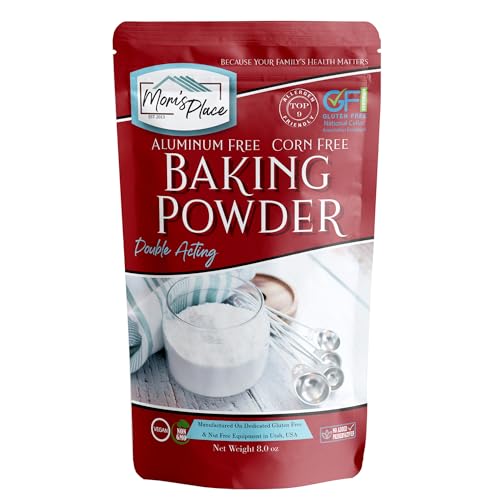
Perfect for Gluten-Free Baking – Achieve consistent rise and texture in your gluten-free baked goods with Mom’s Place Double Acting Baking Powder. Ideal for cakes, muffins, and more.

Gluten Free, Vegan, Vegetarian, Kosher, Halal
How Gluten-Free Flours Change Texture and Moisture
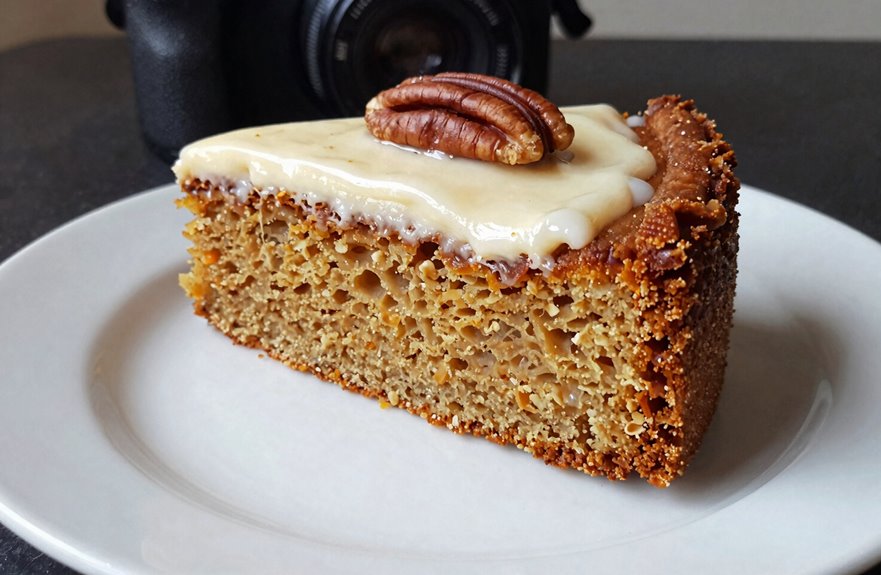
You’ll notice gluten-free carrot cake behaves differently from the classic version because you’re working without gluten’s natural stretch and binding power. To keep your cake from crumbling into dry bits, you’ll rely on xanthan gum, usually ¼ to ½ teaspoon per cup of gluten-free flour, to mimic that structure and hold everything together. You’ll also pack your batter with moisture-rich ingredients like applesauce, crushed pineapple, and shredded carrots, which keep each bite soft and tender even after baking at 350°F for 25-30 minutes.
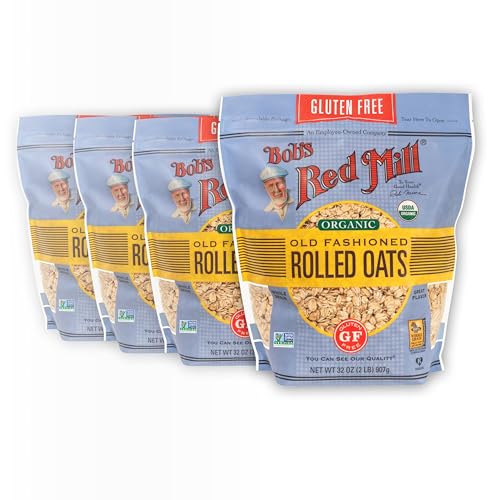
GOOD MORNINGS START WITH GOOD INGREDIENTS: Our Gluten Free Organic Old Fashioned Rolled Oats make a tasty hot cereal that provides lasting energy to fuel your morning; perfect for classic oatmeal cookies, homemade granola and hearty oatmeal bread

GOOD MORNINGS START WITH GOOD INGREDIENTS: Our Gluten Free Quick Cooking Rolled Oats are the perfect solution for busy mornings; they’re steamed and rolled thin, for a hot, satisfying breakfast in just 5 minutes—without sacrificing flavor or nutrition

100% Gluten-Free: Every batch of oats is independently lab-tested and certified gluten-free for safe, worry-free enjoyment
Binding Without Gluten
How does a carrot cake hold together when there’s no gluten to do the job? You rely on a gluten-free flour blend with xanthan gum for binding, creating texture stability in your gluten-free bake.
When you mix, use wet-to-dry mixing to build structure. Your grated carrots, applesauce, and oils help the batter cling together. You pour thinner layers, often in a sheet-cake format, so heat reaches the center fast. This keeps your crumb structure tender, not gummy.
You balance ingredients carefully. A 1:1 gluten-free flour blend with xanthan gum gives viscosity without wheat. You can choose dairy-free options too, adjusting liquids as needed. Your carrot cake stays moist and sliceable because the binding agents create a stable crumb matrix that mimics gluten’s structural role.
Moisture Retention Methods
Once your batter holds together, you face a new challenge: keeping it soft and moist. Gluten-free flour blend varies widely, and xanthan gum helps trap moisture, but you need more tricks.
Your shredded carrots release liquid while baking, boosting moisture retention naturally. Add crushed pineapple and coconut for extra juiciness. These ingredients actively combat dryness. Oil works harder than butter here, coating every crumb evenly, and dairy-free options like coconut oil keep things tender too.
Watch your batter consistency. If it’s thinner, you’ll bake faster, about 25-30 minutes at 350°F, so the crust doesn’t harden before the center sets.
After cooling, refrigeration firms the crumb and lets flavors meld. Your cream cheese frosting adds fat, helping slices hold clean edges. These steps keep your cake soft and moist.
Best Gluten-Free Flours for Carrot Cake
A good gluten-free carrot cake starts with the right flour. You want something that holds moisture and gives you that familiar crumb. Certified gluten-free flour blends work great, especially 1:1 gluten-free flour mixes that already include xanthan gum. You just measure and bake.
Oat flour brings a warm, slightly sweet flavor that pairs beautifully with grated carrots. You’ll want to combine it with leaveners like baking powder and soda for proper lift. Some bakers mix oat flour with other gluten-free flour blends for texture.
Moisture binders like grated carrots do double duty here. They add structure and keep your gluten-free carrot cake tender for days.
| Flour Type | Best For | Key Benefit |
|---|---|---|
| 1:1 gluten-free flour | Easy baking | Already balanced with xanthan gum |
| Oat flour | Nutty flavor | Natural sweetness, fiber-rich |
| Certified gluten-free blends | Consistent results | Reliable texture, widely available |

Richly Spiced & Soft-Baked Texture – Bake moist, fluffy carrot cake infused with classic warming spices like cinnamon, nutmeg, and ginger. A decadent treat ideal for birthdays, holidays, or everyday desserts.

Gluten-Free Binder: Adds strength, structure, and elasticity to gluten-free flour blends for breads, cakes, cookies, and pizza dough; a baking essential for gluten-free kitchens.

VERSATILE ESSENTIAL INGREDIENT - Xanthan gum powder is a vital ingredient for any home cook or baker, offering a wide range of applications from thickening sauces and dairy alternatives to stabilizing dressings and enhancing the overall texture of your favorite recipes.
Do You Really Need Xanthan Gum?
Why does xanthan gum matter so much when you’re baking gluten-free? You’re replacing gluten’s binding power, and without it, your gluten-free carrot cake risks crumbling apart.
Xanthan gum acts like invisible glue. It holds your gluten-free flour blend together, giving your cake structure and texture that feels familiar. You get sliceable pieces with crumb stability, not a pile of moist crumbs on your plate.
Check your gluten-free flour blend first. Many already include xanthan gum, so you’re adding extra without knowing. Read that label; you’ll save yourself from gummy, dense results.
Want dairy-free options? Gum-free options exist too. Some blends use flax or psyllium for binding instead. Your texture shifts slightly, often softer and more tender, but your cake still holds together.
You choose what works for your kitchen and your people.

GOURMET GLUTEN FREE: Giving up gluten doesn’t mean giving up on decadent desserts. This XO Baking Co. gourmet carrot cake mix makes it easy to create moist and decadent cakes for any occasion. Your friends and family will never know the difference!

DELECTABLE BAKING MIX: Good Dee’s Carrot Muffin & Cake Mix mix is a versatile, low carb baking mix made with wholesome ingredients for a sweet treat you don't have to feel guilty about! The perfect gluten free treat for any health-conscious eater.

INDULGENT KETO SNACKS: Enjoy Sweet Logic Baking Mixes with only 1-2g of net carbs per serving. A guilt-free way to satisfy your sweet tooth on a keto diet.
Is Your Baking Powder Secretly Adding Gluten?
How often do you grab baking powder without checking the label? You’re not alone, but this habit can compromise your gluten-free baking results.
Grabbing baking powder without checking the label? This common habit can quietly ruin your gluten-free baking results.
Even when you use perfect gluten-free flour blends and measure xanthan gum precisely, hidden gluten contamination can enter through baking powder. Some brands add starch fillers that contain wheat, which will ruin your careful work.
Check every baking powder label for these specifics:
- Look for “gluten-free baking powder” clearly printed on the front
- Scan for “labeled gluten-free” certification symbols
- Choose aluminum-free baking powder to avoid metallic tastes
- Verify all GF ingredients stay separate to prevent cross-contamination
Keep dedicated tools in your kitchen, read every label twice, and verify your baking powder is certified gluten-free before using it in recipes like gluten-free carrot cake.

Xanthan Gum is a soluble fiber produced from the pure culture fermentation of the microorganism Xanthomonas campestris

Gluten-Free, Soy Free, Wheat-Free, Dairy Free

100% PURE & NATURAL XANTHAN GUM FOR BAKING KETO - Kate Naturals' Xanthan Gum Powder is natural and gluten free. Xantham gum is a great food thickener and is a gluten free baking powder.
One-Bowl or Traditional Mixing: Which Works Better for GF Batter?
You’ll choose between one-bowl simplicity and traditional mixing based on three key factors: how much cleanup you want, the final crumb you’re after, and how well your liquids absorb the gluten-free flour. The single-bowl approach whisks your sugar, eggs, oil, and vanilla together first, then folds in your sifted blend with xanthan gum, carrots, and nuts for a tender, evenly moist cake with minimal dishes. If you prefer denser layers, you’ll use a thicker batter in round pans baked at 350°F for 30-35 minutes, while a thinner spread in a 9×13 sheet pan needs only 25-28 minutes for the same springy center.

TEXTURE & FLAVOR - Our baking powder helps create the perfect texture in your baked goods, making them soft, tender, and delicious. Whether you're baking cookies, cakes, bread, muffins, or even using our baking powder for cooking, it will deliver consistent and reliable results every time.


Mixing Method Simplicity
The mixing method you choose significantly affects your gluten-free carrot cake results. The one-bowl approach offers both simplicity and reliable success. You whisk your room temperature ingredients first, then fold in your gluten-free flour blend with xanthan gum for binding. This builds smooth batter consistency without overworking.
Your one-bowl method delivers four key wins:
- Less handling means fewer air pockets and better moisture retention
- Faster prep shortens your bake time to about 35 minutes
- Finer crumb texture avoids gritty gluten-free pitfalls
- Cleaner cleanup lets you focus on that dairy-free cream cheese frosting
Keep your eggs and oil at room temperature so everything blends evenly. This approach reduces cleanup time and improves your final cake texture.
Batter Texture Results
When you compare mixing methods side by side, the one-bowl approach wins for gluten-free batters. You whisk your dairy, oil, and eggs first, then fold in your blend with xanthan gum already doing the binding work. This keeps your gluten-free batter tender, not tough.
Your grated carrots add moisture and texture, while pineapple and coconut bring sweetness without weighing things down. You’ll notice the batter stays smooth, not lumpy, because you aren’t overworking it. The xanthan gum steps in where gluten can’t, holding everything together so your slices don’t crumble apart.
You pour this thinner batter into a sheet pan, and it bakes in about 35 minutes. You’re left with a cohesive, moist crumb that performs as well as any traditional cake.
Ingredient Hydration Balance
Every ingredient in your bowl fights for water, so balance matters. You need to control hydration balance when building your gluten-free carrot cake, especially with the one-bowl method.
What you’re managing:
- Your gluten-free flour blend absorbs liquid fast, so you must add xanthan gum for binding.
- Grated carrots release moisture during baking, changing your batter’s thickness.
- Applesauce adds extra moisture, so you adjust liquid amounts.
- Xanthan gum keeps everything together without gluten’s stretch.
Whisk wet ingredients first, then sift in your dry mix. This creates smooth batter that holds its shape. Bake in a thinner sheet-cake layer to control moisture retention. Top with dairy-free cream cheese frosting once cooled. The correct texture results from proper ingredient ratio management.
Common Mistakes That Ruin Gluten-Free Carrot Cake
Although gluten-free carrot cake seems simple, small missteps can leave you with a crumbly mess or a gummy brick instead of a tender, moist slice. You need to pick a gluten-free flour blend with xanthan gum already inside, or your cake won’t hold together. Check the label, because extra xanthan gum makes your crumb structure weird and gummy. You must watch your moisture balance too. Dry cakes happen when you skip dairy or don’t use enough shredded carrots. Don’t pack your carrots too tight, or you throw off the carrot density and texture. Overmixing beats air out and makes things dense, so stir until just combined. Finally, don’t skip freezing and cooling time; warm cake ruins frosting. Test for doneness with a toothpick at 25 minutes.
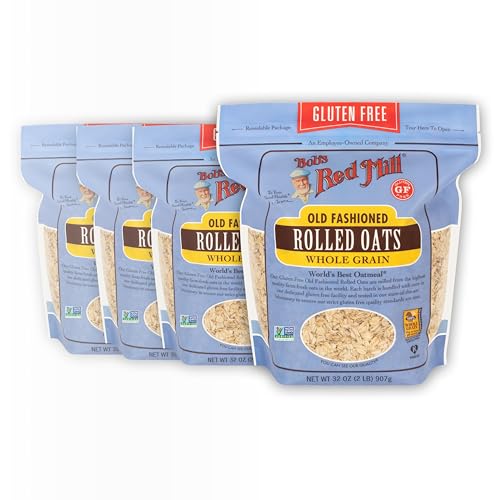
GOOD MORNINGS START WITH GOOD INGREDIENTS: Bob’s Red Mill Gluten Free Old Fashioned Rolled Oats make a tasty hot cereal that provides lasting energy to fuel your morning; perfect for classic oatmeal cookies, homemade granola and hearty oatmeal bread

YOUR NEW PANTRY STAPLE: Oatsome Rolled Oats are the perfect addition to your breakfast, oatmeal cookies, homemade granola, muffins, and more

GOOD MORNINGS START WITH GOOD INGREDIENTS: Our Gluten Free Quick Cooking Rolled Oats are the perfect solution for busy mornings; they’re steamed and rolled thin, for a hot, satisfying breakfast in just 5 minutes—without sacrificing flavor or nutrition
How to Fix Dense or Crumbly Gluten-Free Carrot Cake
Why does your gluten-free carrot cake feel heavy or fall apart when you cut it? Dense, crumbly texture is a common problem for gluten-free bakers, but it’s fixable.
Your gluten-free flour blend needs proper binding to hold together. Check if it already contains xanthan gum; if not, add ¼ teaspoon per cup of flour. Without enough binding, your carrot cake turns crumbly and dry.
Fix your texture with these steps:
- Measure your gluten-free flour blend precisely, using the spoon and level method rather than scooping.
- Add moisture through grated carrots, crushed pineapple, or applesauce.
- Include leaveners exactly as your recipe states for proper rise.
- Fold wet and dry ingredients gently; over-mixing makes cake dense.
These adjustments will produce a tender carrot cake with the proper crumb structure.

Universal Culinary Enhancer: Xanthan gum powder is a versatile ingredient that can be used to thicken sauces, stabilize dressings, and improve the texture of baked goods, dairy alternatives, and other culinary creations.

Versatile Kitchen Essential: Judee's Gluten Free Xanthan Gum is indispensable for anyone serious about gluten-free baking and cooking. Enhance the texture of your gluten free bread dough and keto sauces with this reliable thickener
When “Gluten-Free” Carrot Cake Isn’t Celiac-Safe
How can a cake labeled “gluten-free” still make someone with celiac disease sick? You might grab a gluten-free flour blend off the shelf, but that doesn’t guarantee it’s celiac-safe. Without certified gluten-free oats or spice blends, you’re risking hidden gluten. Cross-contamination sneaks in easily through shared spoons, old cutting boards, or processing contamination at factories. You need dedicated gluten-free bakeware, not pans that baked regular cakes yesterday. Even xanthan gum matters; too much or too little ruins texture, but the wrong brand might contain traces of gluten. Gluten-free labeling helps, yet it doesn’t always mean zero gluten. Check every ingredient twice. The safety of your carrot cake depends on strict kitchen practices and ingredient verification.


PERFECT VANILLA INDULGENCE: With LillyBean's Gluten Free Vanilla Bean Buttercream Frosting Mix, you can effortlessly whip up creamy, fluffy frosting in just minutes. This versatile mix delivers the perfect balance of rich vanilla flavor and smooth texture, making it ideal for frosting cakes, cupcakes, and other desserts.

Perfect for Low Carb Dessert: FitBakes vanilla buttercream frosting is the perfect keto icing for our low carb keto cake mixes and keto cupcake mix! With 0g net carbs, 90 calories per serving, and no added sugars this white frosting is a perfect addition to your favorite keto cakes, cupcakes, cookies, brownies or any keto food. If you're craving something sweet, you can even indulge in a spoonful of our fit bake frosting straight out of the jar.
Kitchen Cross-Contact: Protecting Your Gluten-Free Carrot Cake
Three simple habits will keep your gluten-free carrot cake safe from sneaky gluten crumbs. You start by choosing a gluten-free flour blend with xanthan gum, then you guard against cross-contact at every step.
Your kitchen safety plan:
- Grab dedicated GF pans and line them with parchment before you pour batter.
- Check every gluten-free label on processed add-ins like pineapple and coconut.
- Keep gluten-free ingredients away from regular flour containers in your pantry.
- Practice storage separation: stash your dairy-free frosted cake in sealed containers, apart from gluten baked goods.
You wipe counters, wash hands, and use fresh utensils. These practices eliminate contamination points where gluten crumbs could transfer to your cake. This approach ensures everyone at your table can safely enjoy the dessert together.