You only need to refrigerate cakes with perishable fillings or frostings like cream cheese, whipped cream, fresh fruit, custard, or mascarpone; these must go into the fridge within two hours and last 2–3 days.
Plain butter cakes and those with buttercream frosting stay fresh and moist at room temperature for 1–2 days when wrapped airtight, since the fridge can dry them out.
Let refrigerated cakes sit out 20–30 minutes before serving for the best texture.
You can also freeze and warm your cake for extended storage.
Which Cakes Actually Need Refrigeration (and Which Don’t)
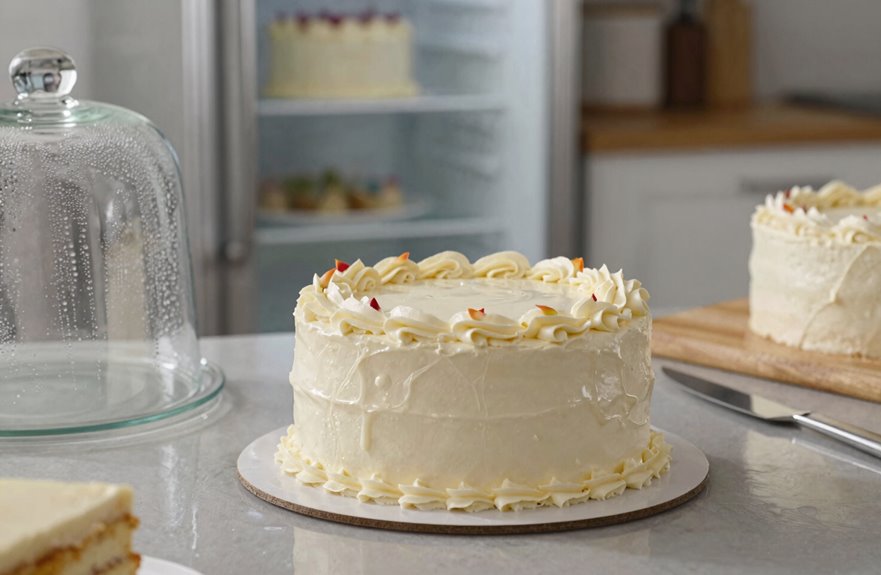
Wondering which cakes you can leave out and which need the cold. Cakes with cream cheese frosting demand refrigeration without exception. That tangy, smooth spread spoils fast without chilling. The same goes for cheesecakes, fruit curds, and anything with mascarpone or fresh berries.
Your butter-based birthday cake sits happily on the counter for two days, staying soft and moist. Oil cakes and sponges follow suit. Just keep them covered.
Your quick rule: dairy-heavy fillings need the fridge, while simple frostings don’t. When you do refrigerate, let your cake sit out for two hours before slicing. The cold cake will taste noticeably better than serving it straight from the refrigerator.

Eight 14 oz cans of Duncan Hines Whipped Cream Cheese Frosting

One 16 oz can of Duncan Hines Creamy Cream Cheese Frosting

The information below is per-pack only
How the Fridge Changes Your Cake’s Texture
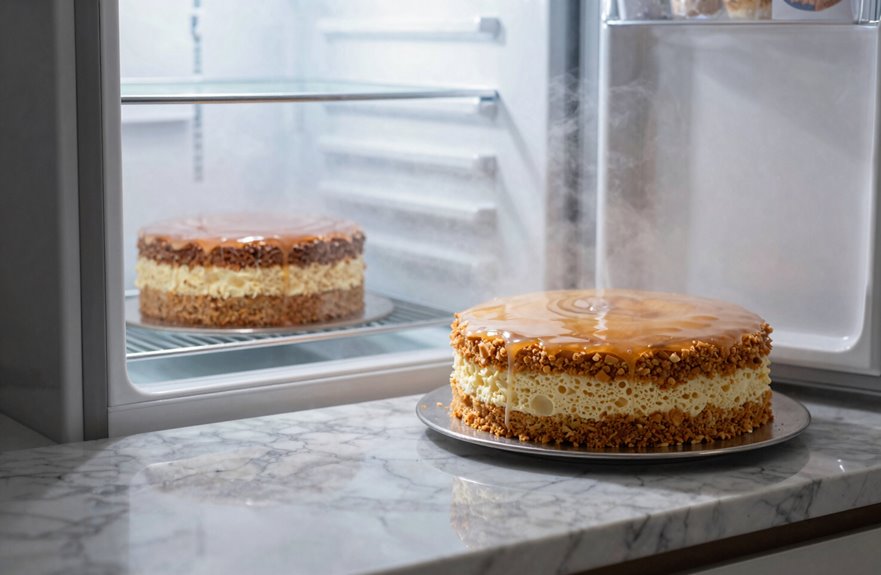
Why does your cake sometimes taste stale after a night in the fridge? You’re witnessing refrigeration steal moisture right from your crumb. Cold air pulls water from your cake, leaving you with a dry, disappointing texture by morning.
| What Happens | How Your Cake Feels |
|---|---|
| Cold air pulls moisture | Dry, crumbly bite |
| Butter firms up | Dense, heavy mouthfeel |
| Condensation forms on icing | Soggy, sticky surface |
| Frosting hardens | Crackly, uneven coating |
| You slice too soon | Tight, compressed layers |
Your butter-based and chiffon cakes suffer most, since they hold moisture best at room temperature. Fondant turns tacky, buttercream stiffens, and sponge cakes lose their spring when refrigerated.
For the best texture, let your refrigerated cake sit out for about two hours before serving. This rest allows the frosting to soften evenly and restores the cake’s original taste and texture.

5 packs : You will get 5 fridge storage containers with colander size from 300 ml to 4200 ml [10 oz - 148 oz ]. Suited for Most fruits, vegetables, berries, meats.

Better for different produce : You will get 4 sized fridge organizers and 4 matched colanders that could be used in the container or separate. Size from 0.32 L to 2.7 L [ 0.34 - 2.85 qt ]. Suited for berries, fruits, vegetables, meats

Keep Berries Fresher, Longer: The ventilated, removable inner basket promotes optimal air circulation for freshness – extending the time for delicious snacking and reducing food waste
Cream Cheese, Fruit, and Custard: Cakes That Must Be Refrigerated
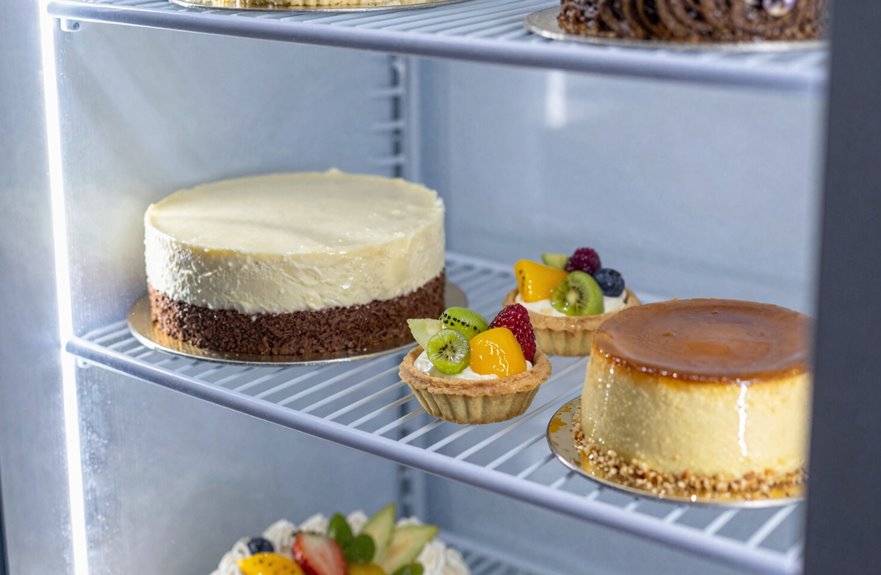
You’ll need to refrigerate certain cakes because of what’s inside or on top. Perishable fillings like fresh strawberries, lemon curd, or pastry cream spoil quickly at room temperature, sometimes within two hours. Dairy-based frostings made with cream cheese or mascarpone can grow harmful bacteria if left out, so refrigerating them promptly prevents foodborne illness.

Includes two 2 lb. bags of Bavarian Cream Pie & Pastry Filling

Classic Bavarian Crème Flavor – Smooth, rich, and creamy with a balanced sweetness. Customers consistently describe the flavor as excellent and bakery-quality.

Give your desserts a burst of flavor with our easy-to-use pie and pastry filling squeeze packs. They're perfect for filling tarts, cupcakes, and pastries, and they make it simple to create stunning filled layer cakes.
Perishable Fillings
How can you tell if your cake needs to go straight into the fridge. Look inside. If you spot cream cheese, whipped cream, mascarpone, fresh fruit, custard, or lemon curd between those layers, you’re looking at perishable fillings that bacteria love.
These ingredients spoil fast at room temperature. Dairy and eggs in your filling create perfect conditions for germs to multiply, sometimes overnight. Consuming improperly stored cake with these fillings can cause foodborne illness.
Pop these cakes into the fridge within two hours of baking or buying. Your cheesecake, strawberry-filled layer cake, or custard tart stays safe and keeps its shape when chilled. Before serving, let your cake sit out for twenty to thirty minutes. This brings back the soft texture and full flavor you worked hard to create.
Dairy-Based Frostings
Some of the tastiest frostings on your cake are also the ones that require the coldest care. When you spread cream cheese or mascarpone on your dessert, you’re adding dairy that spoils quickly at room temperature. You must refrigerate these cakes right away.
| Frosting Type | Why It Needs the Fridge |
|---|---|
| Cream cheese | Prevents spoilage and keeps structure firm |
| Mascarpone | Stops bacterial growth, maintains smooth texture |
| Custard or fruit fillings | Blocks moisture buildup and microbial risk |
Fresh fruit and lemon curd fillings work the same way. They add moisture that invites bacterial growth, so chilling prevents foodborne illness. After refrigerating, let your cake sit out for 2 hours before slicing. This restores the soft, creamy texture while maintaining food safety standards.
Butter Cakes and Sponges: Safe for Room Temperature Storage
Wondering where to stash that butter cake or sponge. You can keep it at room temperature for one to two days. Wrap your cake airtight or pop it into a cake keeper so it stays moist and fresh.
Keep your butter cake or sponge at room temperature for up to two days, wrapped airtight to stay moist and fresh.
Check your kitchen first. If it’s hot or humid, you’ll want to move faster. Let your cake cool completely on the counter before you wrap it. Warm cake traps moisture and turns soggy.
Skip the fridge unless you’ve added cream cheese frosting, custard, or other dairy fillings. Those need chilling for safety.
If you do refrigerate, pull your cake out one to two hours before serving. Cold butter cakes taste dull, but room temperature brings back that soft, tender crumb.

PORTABLE & EASY TO CARRY - Say goodbye to cake disasters... With double strong carrying handles, this travel cake carrier makes transport safe and stress-free. The round cake carrier design is perfect for parties and picnics. Avoid those dreaded cake mishaps!

✅Made of food-grade PP material which is safe to storage food, Recycle to use, more environmental compared with bread carrier. Inner Size:36.5*16.6*13.5cm/14.3*6.5*5.3 inches.

PERFECT SIZE FOR CAKES: Measures 12 x 12 inches with a 4.75-inch height – ideal for holding up to 10-inch round cakes without damaging decorations or frosting
Storing Unfrosted Cake Layers Before Frosting
If you’re baking cake layers ahead of time, you’ll want to store them right so they stay fresh and ready for frosting. Your storage options depend on your timeline and cake type.
Keep layers perfect with these methods:
- Short-term storage: Wrap each layer tightly in plastic wrap, pressing out all air gaps. Store at room temperature for up to two days. For sponge or angel food cakes, use an airtight container instead to lock in moisture.
- Longer storage: Refrigerate or freeze layers with dairy or eggs, or when you need more than a couple days. Always cool layers completely first. Warm cake traps moisture and ruins texture.
- Freezing method: Double-wrap in plastic wrap, label with date and cake type, and thaw overnight in the refrigerator before frosting.

WHIPPED FROSTING: A delicious artificially flavored cream cheese frosting with a light, airy texture; Great for icing baked goods such as cakes, cupcakes, and cookies

One 16 oz. can of Duncan Hines Dolly Parton's Favorite Chocolate Buttercream Flavored Cake Frosting

Make delicious cream cheese icing...without the cream cheese! Significantly less expensive than using real cream cheese, plus your iced cakes and cupcakes do not require refrigeration. Ideal for home-based baking businesses that are restricted by Cottage Food Laws from selling baked goods with frosting that needs to be refrigerated. This flavor is great in candies & chocolates too. Appropriate for use in chocolates and coatings (typical use is ¼ to ½ teaspoon per pound)
How to Refrigerate a Frosted Cake Without Ruining It
Once your cake is frosted, you face a new choice about where to keep it. You can leave it out for 2–3 days, but warm kitchens require refrigeration to keep it safe.
First, chill your cake for 15–20 minutes to harden the buttercream. Then wrap it tightly in plastic wrap or slide it into a cake carrier. This prevents the cake from drying out and absorbing refrigerator odors like onions or garlic.
If your cake has fondant flowers or delicate sugar work, place it in a heavy box first. Cold air causes condensation, and water droplets will damage your decorations.
Before serving, let your cake sit out for two hours. The buttercream will soften, and the flavor will be as intended.

🍋Better for different produce : You will get 4 sized fridge organizers and 4 matched colanders that could be used in the container or separate. Size from 0.32 L to 2.7 L [ 0.34 - 2.85 qt ]. Suited for berries, fruits, vegetables, meats . and you will get a pen and lable which can help us clarify the date for preparing the fruits.

[8Pack Fruit Containers Set] Anysig fruit storage containers set includes 8 containers, 8 removable colanders, 8 airtight lids and 2 Divider Plate, Varied size are 112 oz/3300 ml *2 +57 oz/1700 ml *2 + 27 oz/800 ml *2 + 13 oz/380 ml *2, which meet your Fridge storage needs

5 Different Sizes & Space Saving: This set of 5 fresh produce containers includes sizes: 300ml, 800ml, 1700ml, 3200ml, 4300ml (equivalent to 10.1 oz, 27 oz, 57.5 oz, 108 oz, and 145 oz). These versatile fruit and vegetable storage containers are perfect for storing fruits, vegetables, berries, and meats. The large food storage containers with lids are designed to maximize space in your fridge, freezer, or cabinet, keeping your kitchen neat and organized.
Why Freezing Beats Refrigerating (And How to Do It Right)
You can lock in freshness for up to four months by freezing your cake instead of refrigerating it, since the cold air in your fridge slowly steals moisture and ruins the soft crumb you’ve worked hard to create. Skip the fridge entirely for anything longer than a day, and wrap each cooled layer twice in plastic wrap before labeling it with the date and type. When you’re ready to enjoy your cake, thaw it with care by moving it to the refrigerator overnight, letting it come back to room temperature slowly without any condensation or sogginess ruining your treat.

2lb ready-to-use squeeze tube


Includes one 2 lb. bag of Bavarian Cream Pie & Pastry Filling
Lock In Freshness
Why settle for a dry, fridge-tired cake when freezing keeps it bakery-fresh for months? You deserve better than stale leftovers, and your fellow bakers agree. Freezing is the secret we all share.
Here’s how you lock in freshness like a pro:
- Wrap it tight – Cover each layer twice in plastic wrap, and don’t forget to label the date and cake type.
- Chill first, freeze second – Let frosted cakes set in the fridge before wrapping so your buttercream stays perfect.
- Thaw with patience – Move frozen cake to the refrigerator 24 hours before serving for even texture throughout.
You can freeze slices too. Just wrap individually. Your future self will thank you when that chocolate layer tastes as moist as day one.
Skip the Fridge
How long do you really need to keep that cake? If it’s more than a few days, skip the refrigerator entirely. Your fridge steals moisture and swaps smells, leaving cake dry and odd-tasting. Instead, embrace freezing for storage up to 3–4 months.
Cool your cake completely. Warmth creates ice crystals that ruin texture. Wrap each layer twice in plastic wrap, pressing out air. Label with the cake type and date so you don’t play guessing games later. For frosted cakes, chill until the buttercream hardens, then wrap.
Stack wrapped layers in your freezer. Freezing preserves flavor and crumb far better than fridge storage ever could. When you’re ready, move cake to the refrigerator overnight before decorating.
Thaw With Care
Freezing locks in freshness, but thawing wrong can undo all that work. You’ve wrapped your cake with care, so let’s finish strong together.
Here’s how to thaw like a pro:
- Plan ahead. Move frozen layers to the fridge 24 hours before you need them. This gives the center and edges time to soften evenly.
- Keep it covered. Leave those wraps on while thawing frosted cakes overnight in the refrigerator. Unwrap only after bringing to room temperature.
- Handle slices with care. Thaw individual pieces in the fridge, still wrapped, so they stay moist and ready to enjoy.
Your patience delivers results. You’ll slice into cake that tastes as fresh as the day you baked it, and your guests will notice the difference.
How Long Does Cake Last in the Fridge?
When you’re wondering about cake storage, the fridge can be your friend, but only for certain kinds. You need to know which cakes belong there and how long they’ll stay fresh.
| Cake Type | Fridge Life |
|---|---|
| Buttercream frosted | 2–3 days |
| Cream cheese frosted | 2–3 days (must refrigerate) |
| Custard or fruit filled | 2–3 days |
| Unfrosted layers | 5–7 days |
| Fully decorated | 2–3 days |
Refrigeration extends shelf life when dairy is involved, but you risk drying out simple cakes. You can wrap unfrosted layers well and freeze them for 3–4 months instead. Frosted cakes stay fresh about 1 month when frozen. Proper storage prevents waste and keeps your cake at its best quality.

SUPER STURDY: Built to last, our cupcake holder with lid is designed to safely transport freshly baked goods for many years to come.

HIGH QUALITY & DURABLE: Holiday Season is here! Bring home this beautiful Cake Server is designed to store and serve!.This cake server accommodates up to 13 inch round cake

Cake Transport Container: Our cake transport container have 3 secure side clamps lock that click firmly onto the tray, protect your cake or food safe
How to Warm Up Cold Cake for Serving
Why let a cold, stiff slice ruin your dessert? You’ve pulled your cake from the fridge, and now it’s time to bring it back to life. A proper warm-up makes all the difference between a dry crumb and that soft, tender bite you remember.
Here’s how fellow cake lovers do it:
- Microwave frosted slices for 15–20 seconds to wake up the texture without melting the frosting.
- Let frosted cake sit out for 2 hours for better flavor and a softer crumb.
- Warm unfrosted pieces for 5–10 seconds or give them a quick re-toast for that fresh-baked feel.
Check your cake often and use small time jumps. Cold storage preserves your cake, while gentle warmth restores its texture and flavor.

Contains: 1 Container of Organic Frosting

Our Sweet, creamy frostings take any treat from delicious to delightful.

READY TO USE CREAM CHEESE FILLING AND FROSTING – Smooth creamy bakery-style filling with rich cream cheese flavor and balanced sweetness. Ready straight from the pouch for quick dessert prep frosting spreading or pastry filling without extra mixing.